
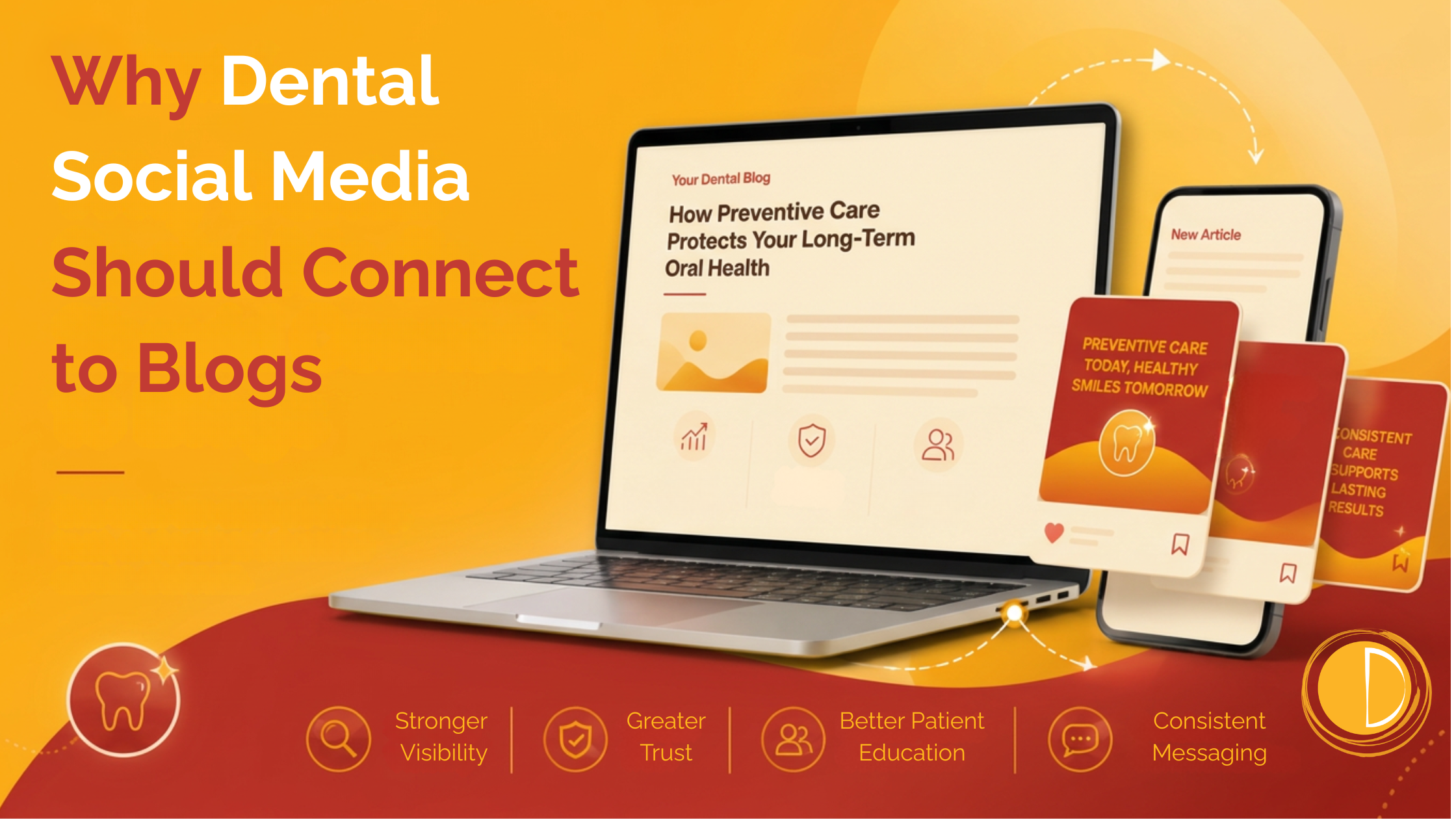
A dental blog and a social media post should not feel like two separate pieces of marketing.
When they work together, they can help a practice answer patient questions in more than one place. The blog gives the topic more detail. Social media makes the topic easier to notice, save, share or revisit.
For dental clinics, this matters because patients often research before they are ready to book. They may be wondering why a tooth hurts, whether Invisalign is right for them, what to do in an emergency, or what to expect from a treatment. A short post can introduce the topic. A blog can explain it more fully.
That is why digital marketing for dentists works best when each channel has a clear purpose.
Why Blogs and Social Media Should Work Together
Blogs and social media support different parts of the patient journey.
A blog gives your practice room to explain a topic clearly. Social media helps more people see that topic in a quick, visual and approachable way. When the two work together, your content can do more than fill space on a website or social feed.
It can help patients:
- Understand common dental concerns
- Learn more about treatment options
- Recognize your practice as a helpful resource
- Find their way back to your website
- Feel more confident contacting the office
The social post introduces the question.
The blog gives the fuller answer.
Together, they help make your marketing more useful and connected.
Why a Blog Gives Dental Topics More Depth
A blog allows a dental practice to answer patient questions in a way most social posts cannot.
A social post may introduce a topic like:
- When should you consider dental implants?
- What is the difference between a crown and a filling?
- Why are your gums bleeding?
- How can parents help children avoid cavities?
- What should you do during a dental emergency?
Those are useful social media topics, but many patients will need more context before they feel ready to take action.
A blog gives your practice space to explain the issue clearly, break down options, address common concerns and guide readers toward a practical next step. It can also connect naturally to related service pages on your dental website, helping patients move from research to decision-making.
From an SEO perspective, blog content gives your website more opportunities to answer relevant search queries. A well-written blog can help search engines understand what your practice talks about, who the content is for and how it connects to your services.
From an AEO perspective, blogs can also support answer-style search and AI-assisted discovery by organizing information clearly. Direct headings, concise explanations and patient-friendly FAQs make the main answer easier for both people and search systems to understand.
The goal is not to write blog content only for rankings. The goal is to create helpful, reliable, people-first content that answers real patient questions while supporting long-term online visibility.
Why Social Media Gives Blog Content More Reach
A blog can be helpful, but it still needs to be seen.
Social media helps dental practices bring blog content into the spaces where patients are already spending time. A blog topic can become a carousel, short video, static graphic, story, newsletter teaser or Google Business Profile update.
For example, a blog about dental crowns could become several social posts:
- Signs you may need a crown
- Crown vs. filling: what is the difference?
- What to expect during a dental crown appointment
- Questions to ask before restorative treatment
- When to contact a dentist about a cracked tooth
A post about bleeding gums might get someone’s attention while they are scrolling. The blog can then explain when bleeding gums may be worth discussing with a dentist and what a patient can expect during a gum health visit.
This helps one strong topic work harder.
Instead of publishing a blog and moving on, your practice can use that blog as the source for multiple pieces of patient-friendly content. This makes planning more efficient and helps keep your messaging consistent across channels.
Social media may not lead to an immediate appointment every time. But it can support familiarity and trust. A patient may see a post today, read the full blog later, check your reviews another day and contact the practice when the timing feels right.
That is why social media should not be treated as separate from the website. It should help guide people back to useful information.
How Blogs and Social Posts Support the Patient Journey
Patients rarely make decisions from one piece of content alone.
A person looking for a dental clinic may interact with several touchpoints before booking:
- They see a social post about a dental concern.
- They click through to read the full blog.
- They visit a related service page.
- They check the practice’s reviews.
- They look at the Google Business Profile.
- They call, submit a form or request an appointment.
This is why connected content matters.
If your social media, blog, website and local presence all support the same message, the patient experience feels clearer. Patients do not have to piece together disconnected information. They can move from quick awareness to deeper education to a practical next step.
For dental practices, that clarity can help reduce uncertainty. It can also make your marketing feel more trustworthy because the practice is consistently answering real questions in a helpful way.
What Should Dental Clinics Blog About?
Good dental blog topics often come from real patient questions.
A strong blog topic should connect to something patients actually want to understand, while also supporting the services your practice offers. This kind of patient education helps make dental marketing feel useful, not just promotional.
Examples include:
- How to know if you need emergency dental care
- What to expect during a dental implant consultation
- Invisalign vs. braces: what should patients consider?
- When is a dental crown recommended?
- Why regular cleanings matter for gum health
- What parents should know about children’s dental checkups
- How teeth whitening works and what to ask before treatment
These topics can support digital marketing for dentists because they connect patient education with service relevance.
The best topics are not just about keywords. They are about usefulness. If the blog helps a patient understand their concern, consider their options and feel more confident reaching out, it is doing valuable work.
How to Turn One Dental Blog Into Social Media Content
One blog can become several social media posts when you plan intentionally.
A simple process could look like this:
- Choose one patient question.
- Write a helpful blog that answers the question clearly.
- Pull out three to five social media post ideas from the blog.
- Link social posts back to the full article when helpful.
- Reuse the topic in patient newsletters or future content.
For example, if the blog topic is “What to Do If You Have a Dental Emergency,” the social content could include:
- A carousel on signs of a dental emergency
- A static post about when to call the dentist
- A short video explaining what not to do with a knocked-out tooth
- A newsletter teaser linking to the full blog
- A Google Business Profile post about emergency appointment availability
This helps your content feel connected instead of random.
It also makes content creation easier. Rather than starting from scratch every week, your practice can build a small content system around useful patient questions.
Should Social Posts Link Back to Blog Content?
Often, yes.
If a social post introduces a topic and the blog gives a fuller explanation, linking back to the article gives interested patients somewhere useful to go next. They can read more, visit a related service page, learn about the practice and find contact information when they are ready.
Not every social post needs a link. Some posts are meant for awareness, reminders or engagement. But when a blog adds helpful detail, the post should make that next step easy.
It can also make sense to link from the blog to related social content when the post adds something useful, such as a short video, carousel, visual explanation or campaign update.
The link should help the reader, not just exist for SEO. Google’s own guidance supports using links in ways that help readers and search engines understand the relationship between pages, so it is best to link to related resources where they help readers.
How This Supports SEO, AEO and Digital Marketing for Dentists
Connected content gives your website more helpful information around the topics patients are already asking about.
A blog can answer the question in detail. A social post can point people back to that fuller resource. A newsletter can remind patients about the topic later. A service page can help them understand whether the treatment may be relevant to them.
That can support SEO by adding useful website content around real patient questions. It can support AEO by making answers easier to find, summarize and understand. It can also make your marketing feel more consistent across the places patients may encounter your practice.
For dental clinics, this is especially valuable because patient decisions often require education and reassurance. A person may need to understand the treatment, the timeline, the benefits, the risks, the cost factors or the next step before they feel ready to book.
Connected content helps make that decision easier.
As search continues to change, clear website content, strong local visibility and AI-ready content can help dental practices stay easier to find, understand and trust online.
A Simple Content Planning Checklist for Dental Practices
Before creating your next blog or social post, ask:
- What patient question are we answering?
- Does this topic connect to a service we offer?
- Can this blog become several social posts?
- Can the social posts link back to the full article?
- Can the topic also support a patient newsletter, Google Business Profile update or future campaign?
- Is the next step clear for the patient?
This keeps content focused and practical.
The goal is not to create more content just to be active online. The goal is to create useful content that helps patients find answers, understand the practice and feel confident reaching out.
Make Your Content Work Harder
Blogs and social media are stronger when they work together.
A blog gives your dental marketing something helpful to say. Social media helps more people see it. Together, they can support visibility, trust, patient education and a clearer path back to your website.
For dental practices, this kind of connected content can make marketing feel more intentional and less scattered. One useful patient question can become a blog, several social posts, newsletter content and a stronger website resource.
At Vitamin D Marketing & Design, we help dental practices create clear, connected and patient-focused dental marketing strategies that support visibility, trust and growth.
Frequently Asked Questions About Blogs and Social Media for Dental Clinics
Ready to Make Your Dental Content Work Harder?
Your dental blog, social media and website should not feel disconnected. They should work together to help patients find answers, understand your practice and feel confident reaching out. At Vitamin D Marketing & Design, we help dental practices create clear, connected marketing that supports visibility, trust and growth. Contact us to start building a more intentional digital strategy for your practice.
Follow us for more tips to help your dental practice grow
Author: