Digital marketing for dentists often focuses on Google rankings, website visits and new patient enquiries. AI search adds another question: does your practice appear when someone asks for dental advice or a local provider?
An AI answer might name your practice, link to your website or recommend a competitor. Those are different signals, and each needs context.
For a broader look at how AI is changing digital marketing for dental practices, start with our overview. Here, we’ll focus on what to measure, and what those numbers mean for your clinic.
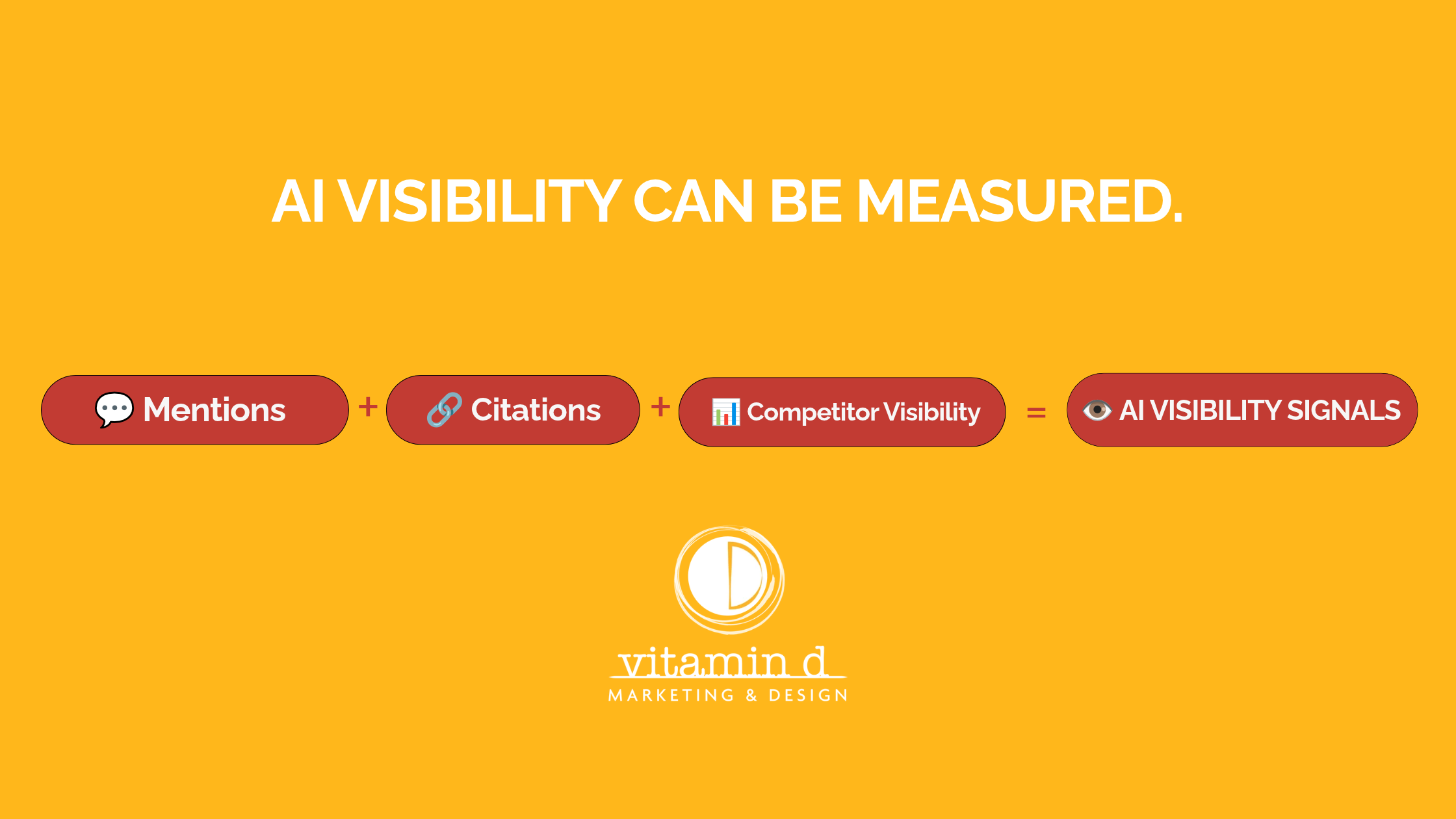
Quick answer: AI visibility measures how often and how accurately your practice appears in a chosen set of AI answers. A useful report looks at visibility, mentions, share of voice, citations, brand perception and performance by question. It doesn’t tell you how many patients booked.
1. AI visibility: are you appearing in relevant answers?
What it shows: How often your practice appears in the answers you track. Start with questions about your services and area, such as “Which dentists in Toronto help anxious patients?”
For example: If your practice is named in 20 out of 100 tracked answers, it appears 20% of the time in that sample. That’s one simple calculation; tools may define their scores differently. Searchable’s guide to AI visibility scores explains this approach.
What it doesn’t show: A score isn’t a grade for your whole marketing strategy. A 20% score doesn’t mean 20% of patients saw your practice. It describes only the answers tested.
2. Mentions: how does your practice enter the conversation?
What it shows: Which answers name your practice and how it appears: as a recommendation, one option in a list or a passing reference.
What it doesn’t show: A mention isn’t automatically positive. It also isn’t a website visit or an appointment. Read the answer before treating the mention as a win.
3. Share of voice: how do you compare with competitors?
What it shows: How your practice’s presence compares with competitors in the same set of answers. The report should name the competitors and explain how the percentage is calculated.
What it doesn’t show: Share of voice isn’t your share of local patients or revenue. It also doesn’t explain why another practice appears more often.
4. Citations and sources: which pages are linked?
What it shows: Which pages an AI answer links to as sources. These might be your website, a directory, a review site or a publication. Checking them can reveal outdated details or gaps in your online information.
What it doesn’t show: A citation doesn’t guarantee a recommendation or a click. The links shown aren’t a complete record of everything that shaped the answer.
Remember: A mention names your practice. A citation links to a source. You can have one without the other.
5. Sentiment and brand perception: how is your practice described?
What it shows: How AI describes your practice. Is the tone positive, neutral or negative? Are your location, services and patient information correct?
What it doesn’t show: This isn’t a patient satisfaction score. A friendly description can still be wrong, so check the facts as well as the tone.
6. Performance by question: what are you visible for?
What it shows: Which services and patient questions bring up your practice. You might appear for family dentistry but rarely for emergency appointments. Grouping answers by service and location makes those gaps easier to spot.
What it doesn’t show: One answer doesn’t establish a trend. Nor does a tracked question tell you how many patients ask it. Look for patterns across related questions and repeated checks.
Are You Showing Up for the Patients You Want to Reach?
A useful AI visibility baseline starts with the services you want to grow and the patients you want to reach. If your clinic wants more emergency appointments, appearing in answers about routine checkups won’t tell you much about that goal.
The questions you test make a difference:
When someone already knows you: “Does [your practice name] offer emergency appointments?” checks whether AI has accurate information about your clinic.
When someone is looking for a dentist: “Which dentists in Burlington offer emergency appointments?” checks whether your clinic appears before that person has chosen a practice.
The same approach works for family dentistry, dental implants or care for anxious patients. Choose questions that match the services you offer and the communities you serve.
What this means for your clinic: A high score is less useful if it comes mostly from questions that already include your name. You need to know whether your practice appears when people ask for the care you want to provide.
Vitamin D can build your AI Visibility Baseline around those priorities, then check the same questions over time. The snapshot helps you see where your clinic appears, where competitors show up instead and which gaps in your online information may need attention.
How AI visibility fits into digital marketing for dentists
AI visibility metrics help you decide what to investigate and where to focus your dental marketing. Read them alongside website visits, enquiries and booked appointments. Where AI referral visits can be identified, they add useful context.
Key takeaway: More AI mentions do not prove that AI brought you more patients.
If your practice rarely appears for a service, check whether your website clearly explains it and where you offer it. Clear dental website design helps visitors find those details too. If answers contain errors, review your pages and the sources cited before measuring again.
Does AI visibility replace dental SEO?
No. AI search visibility adds to your dental marketing plan. It doesn’t replace a useful website, accurate practice details or search engine optimization (SEO). Google’s guidance on AI features says the same SEO fundamentals still apply; there is no special markup required for its AI search features.
Effective digital marketing for dentists starts with clear service information, useful answers to patient questions and facts people can verify. Short answers and callouts help readers find the point quickly. They don’t guarantee an AI citation or a higher search ranking.
Common Questions About AI Visibility for Dentists
What is a good AI visibility score for a dental practice?
There’s no single target that fits every practice. Compare your score with your own starting point and with competitors tested using the same questions, locations and AI platforms. Searchable’s guide to AI visibility scores explains why the questions you track matter.
Does an AI mention mean my practice is being recommended?
No. An AI answer might name your practice as one option, in a comparison or as a passing reference. Read the wording to see whether it actually recommends your practice and describes it accurately.
Can AI visibility reports show how many patients booked?
No. These reports show how your practice appears in the answers tested. Use website analytics and enquiry and booking records to assess patient results; even an identifiable AI referral visit doesn’t prove it led to an appointment.
Curious how your practice shows up in AI search?
An AI Visibility Baseline gives you a snapshot of where you appear, how your practice is described and where competitors show up instead.
Book a chat with Vitamin D to talk through what you’d like to learn and whether a baseline AI Visibility Report would be useful for your practice. You can also call 289-245-1150.
Vitamin D Marketing & Design is based in Burlington, Ontario, and works with dental practices across Canada and the United States.

Written By: Emily Grove